Can property tax on a neglected vacant house in Tomakomai rise up to six times? Conditions for “specified vacant houses” and “poorly managed vacant houses”, and how to avoid it by selling or demolishing
Many of you probably searched for this because you heard that “property tax becomes six times higher if you leave a vacant house (akiya) neglected” and became worried. In short, the tax rises up to six times only for “the land of a vacant house that has received a recommendation from the municipality”. Not every vacant house automatically gets a tax six times higher. This article explains how and when the tax goes up, the demolition subsidy and vacant house bank available in Tomakomai City, and the option of selling to stop the tax burden.
What “six times” really means: losing the residential land reduction
Land with a house on it receives the “residential land special measure”, which lowers the property tax (kotei shisanzei). For small-scale residential land (the part up to 200 m²), the tax base is reduced to one-sixth. For general residential land (the part over 200 m², up to 10 times the floor area of the house), it is reduced to one-third.
| Category | Tax base for property tax | Tax base for city planning tax |
|---|---|---|
| Small-scale residential land (the part up to 200 m²) | One-sixth | One-third |
| General residential land (the part over 200 m², up to 10 times the floor area of the house) | One-third | Two-thirds |
If a vacant house is designated as a “specified vacant house” (tokutei akiya) or a “poorly managed vacant house” (kanri fuzen akiya) and the municipality issues a recommendation, the land is no longer eligible for this special measure. For small-scale residential land, the tax base goes back from one-sixth to the full amount, so the property tax on the land rises up to about six times. Only the tax on the land goes up; the tax on the building does not change. The actual increase depends on the assessed value of the land and the burden adjustment measures.
How much does it go up? A sample calculation
We calculate with these assumptions: the assessed value of the land used for the tax base is ¥6 million, it is all small-scale residential land, the standard tax rate is 1.4%, and we ignore the burden adjustment measures and city planning tax.
| Calculation | Per year | |
|---|---|---|
| With the special measure | ¥6 million × 1/6 × 1.4% | ¥14,000 |
| Without the special measure (after a recommendation) | ¥6 million × 1.4% | ¥84,000 |
| Difference | ¥70,000 per year |
These figures are for explanation only. For your own amount, check the “tax base amount” and the “residential land” entries on the property tax statement that arrives every spring.
The steps up to a recommendation
Under the Act on Special Measures for Promotion of Measures for Vacant Houses (the Vacant Houses Act), neglected vacant houses are handled in the following order. An amendment that took effect on 13 December 2023 created the new category of “poorly managed vacant house”, one step before a specified vacant house.
- Poorly managed vacant house: a condition in which the house may become a specified vacant house if it is left as it is. The municipality gives guidance, and if the condition does not improve, it can issue a recommendation.
- Specified vacant house: a condition that meets any of the following: risk of collapse, harm to sanitation, serious damage to the landscape, or being inappropriate for preserving the living environment of the neighborhood. The steps are advice and guidance, then a recommendation, then an order.
- Recommendation: this is the turning point at which the tax special measure is removed. If the recommendation is in effect on 1 January (the tax assessment date), the special measure is removed from that fiscal year.
- Order and administrative execution: violating an order carries a non-penal fine of up to ¥500,000. If the municipality demolishes the house on the owner’s behalf (administrative execution, gyōsei daishikkō), the cost is charged to the owner.
In other words, you will always receive a notice of “guidance” and a “recommendation” before the tax becomes heavier. When you receive a notice, treat that as your deadline to decide whether to sell or demolish.
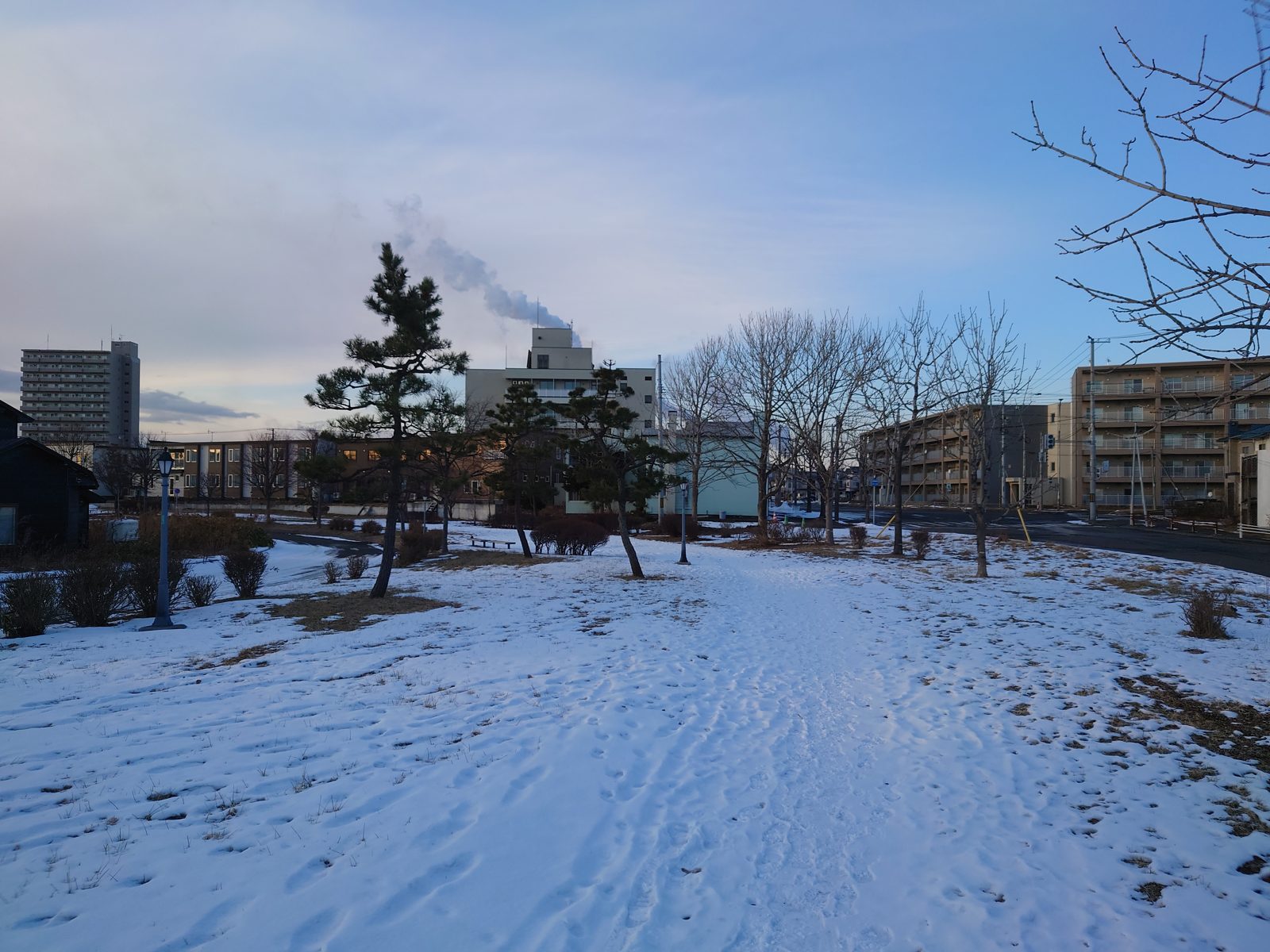
Why vacant houses in cold regions deteriorate easily
In cold regions such as Tomakomai, damage to roofs and gutters from snow, frozen water pipes and similar problems can progress during the winter without anyone noticing. In a house where no one lives, no one clears the snow from the roof or drains the water, and its condition can change greatly within a few years. The cost of repairs from freezing is explained in “If water pipes freeze or burst in Tomakomai“.
Four options to stop the tax burden
| Option | Suitable for | Points to note |
|---|---|---|
| Sell (through brokerage) | The house is in fair condition and you have time | It takes 3 to 6 months to sell |
| Sell (direct purchase by a real estate company) | You want to let go quickly, the damage is serious, or many belongings are left inside | The price is usually about 70 to 80% of a brokered sale |
| Rent out | You or your family plan to use it in the future | Renovation costs and vacancy risk. The work of managing it continues |
| Demolish | There is a risk of collapse, or you want to sell it as land | After demolition, the residential land special measure is removed and the tax on the land goes up |
| Keep managing it as it is | You plan to use it within a few years | Regular checks and roof snow clearing are needed |
Demolish only “after the buyer is decided”
If you tear down the building and leave a vacant lot, the land is no longer residential land, and the property tax goes up the following year. If you demolish first, you may end up paying the higher tax for as long as the land does not sell. There is also a way to sell the house as it is, without the seller paying for demolition. If you do demolish, the basic rule is to time it with the sales contract.
Tomakomai City has a “vacant house demolition subsidy“. Eligibility and amounts change each fiscal year, so check the city’s latest information before you apply. You usually need to apply for the subsidy before the work starts, and if you demolish first, you may not be eligible.
Tax when you sell: the ¥30 million special deduction for vacant houses
When you sell an inherited family home, you can deduct up to ¥30 million from the capital gain if you meet the following requirements (National Tax Agency).
- The house was built on or before 31 May 1981 and is not a unit in a condominium (not under sectional ownership)
- Just before the inheritance began, the deceased person lived in the house alone
- You sell by 31 December of the year that includes the day 3 years after the inheritance began (sales up to 31 December 2027 are eligible)
- The sale price is ¥100 million or less
- The house meets the earthquake resistance standards, or you demolish the house and sell the land (from January 2024, it is also allowed if the earthquake retrofit or demolition is done after the sale, by 15 February of the following year)
If there are three or more heirs, the deduction is up to ¥20 million per person. The steps to obtain the “confirmation of the house where the deceased lived” (hisōzokunin kyojūyō kaoku tō kakuninsho) in Tomakomai City are on the city’s page “About the ¥30 million special deduction for capital gains on vacant houses“. For the overall selling process and costs, see “Selling real estate in Tomakomai“. For all the options for vacant houses, see “Selling, renting out or demolishing a vacant house in Tomakomai“.
What we can do
Banana House Inc. (1-1-1 Honkocho, Tomakomai) appraises and buys vacant houses that have deteriorated badly or that may be hard to sell. Even if you are at the stage of “I received a notice from the city” or “I inherited a house but live too far away to manage it”, the appraisal is free. To apply, just give us three things: the type of property, its location and your contact details. Depending on the content of the notice, we may also ask you to consult a lawyer on legal matters or a tax accountant on tax matters.
This page was machine-translated. The Japanese original prevails.
Frequently asked questions
From when does the property tax on a vacant house become six times higher?
It does not become six times higher just because the house is vacant. If the municipality issues a recommendation for a poorly managed vacant house or a specified vacant house, and the recommendation is still in effect on the following 1 January, the residential land special measure is removed from the property tax for that fiscal year. The actual increase depends on the assessed value of the land and the burden adjustment measures.
What is the difference between a specified vacant house and a poorly managed vacant house?
A poorly managed vacant house is in a condition where it may become a specified vacant house if left as it is. A specified vacant house is already having a bad effect on the surroundings, for example through a risk of collapse or harm to sanitation. In both cases, the residential land special measure is removed once a recommendation is issued. The category of poorly managed vacant house was added by the amendment of December 2023.
After a recommendation, can the tax go back to the original amount?
If you fix the problems pointed out and the municipality withdraws the recommendation, the special measure applies again from the next tax assessment date. Whether and when the recommendation is withdrawn is decided by the municipality, so check with the city office after you make the improvements.
Is it better to demolish a vacant house first?
We do not recommend demolishing before the sale is decided. A vacant lot loses the residential land special measure, and the tax on the land goes up until it sells. The demolition subsidy may also require you to apply before the work starts. First get an appraisal, and compare selling as it is with demolishing and selling.
What should I check first to find out whether a vacant house in Tomakomai will sell?
If you have three things, the name on the land register, the property tax statement and a document showing the year of construction, the appraisal will be more accurate. If the property is still in the name of the deceased, inheritance registration is needed before the sale. We accept appraisal requests even if you do not have all the documents.
Consultations on selling and vacant houses are free
We can start a valuation with just three things: the property type, its location and your contact details. You do not need to have decided to sell yet.
Banana House Inc., 1-1-1 Honkocho, Tomakomai. We never use pushy sales. Please write in English or Japanese.
Sources and data
- Data retrieved: 2026-10-10. All prices are official public data and do not include our own estimates.
Yuki Nakazawa (President, Banana House Inc.) reviewed the Japanese original of this article. As a licensed real estate broker, we follow the Japanese rules for real estate advertising.