Buying and selling apartment buildings and income properties in Tomakomai | How to read yields, tenant demand by district, and costs specific to Hokkaido
Tomakomai is a city of about 163,000 people and about 92,000 households. There are jobs in manufacturing, the port and logistics, and demand from workers posted away from their families and from transferred employees is stable. Because property prices are lower than in Sapporo, a certain number of people consider buying here as an income property. However, Hokkaido has costs that Honshu does not, and if you overlook them, the numbers will not add up. This article explains how to read yields, tenant demand by district, and how to proceed when selling.
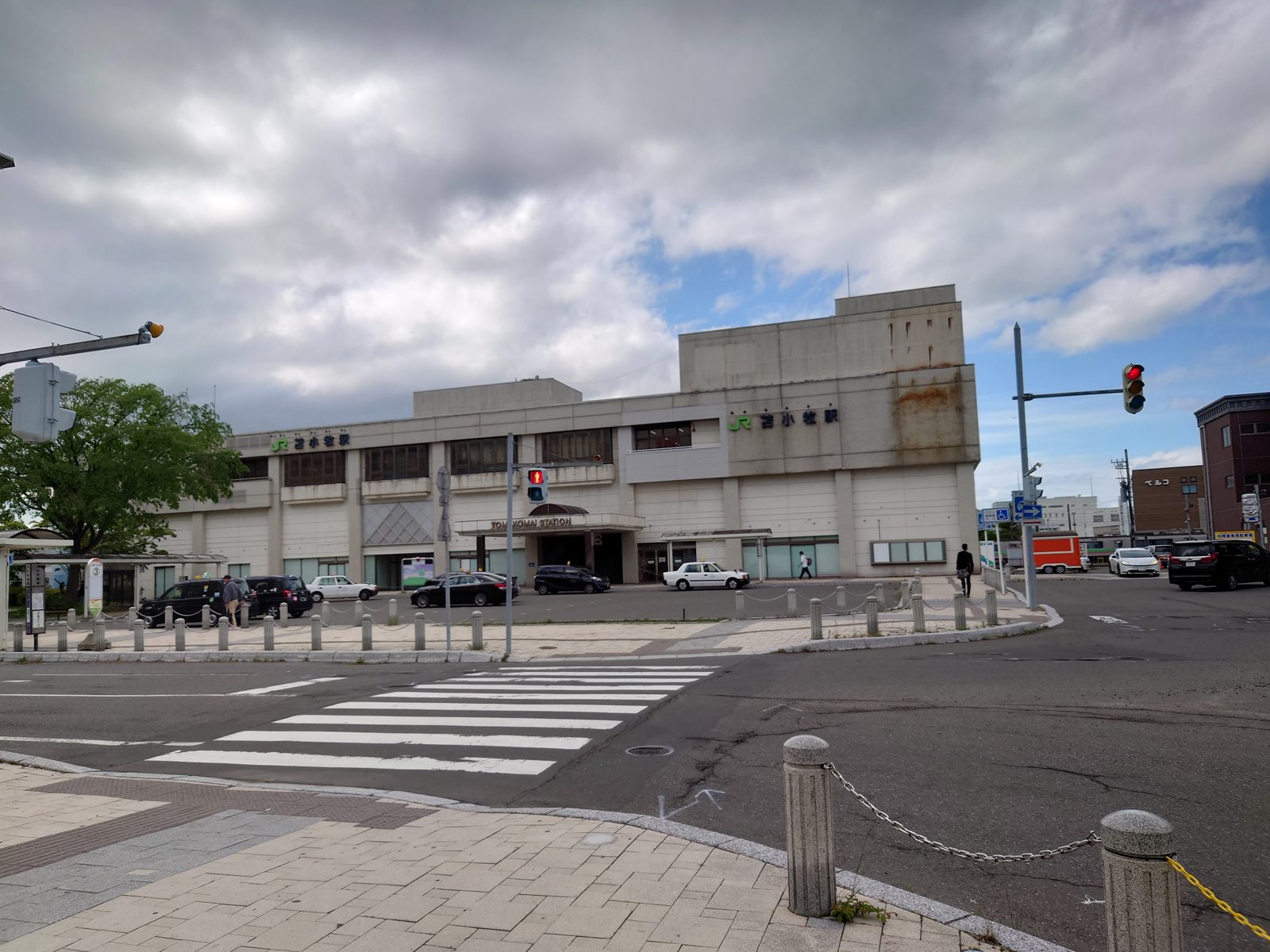
What supports rental demand in Tomakomai
- Manufacturing and the port: companies in the Tomato (Tomakomai Eastern) area and the Western Industrial Base, and logistics at Tomakomai Port. There is demand from workers posted away from their families and from fixed-term factory workers
- Commuting toward Chitose: New Chitose Airport is about 15 min from Numanohata. Because rents in Chitose have risen, some people choose to live in Tomakomai and commute
- Job transfers: moves are concentrated in February to April and in September
On the other hand, the population of the city as a whole is slowly decreasing. What matters is not the figure for the whole city, but the trend in the district where the property is. In the 2026 official land price publication, prices rose in the east (Takuyu-higashimachi +7.1%, Shinkaicho +7.8%, Utonai-kita +9.0%, Numanohata-chuo +7.7%) because people are gathering in this area.
Tenant demand by district
| District | Main tenants | Features |
|---|---|---|
| East (Numanohata, Takuyu, Hokuei, Shinkai, Utonai, Higashikaicho) | Families, people working in the Tomato area, commuters toward Chitose | Population is growing. Many new properties, so there is competition |
| Center (Omotemachi, Wakakusacho, Omachi, Kasugacho, Suehirocho) | Single people, people without cars | Close to the station and shops. Many older properties on the market |
| North (Hokkocho, Shiroganecho, Sakuragicho, Kokocho) | Families, people who want to be near schools | Quiet residential area. Tenants rarely change |
| West (Itoi, Nisshincho, Sumikawacho, Tokiwacho) | Local families, price-conscious tenants | Lower rents. Purchase prices are also low |
| Near the port and industrial areas (Shinmeicho, Motonakanocho, Akeno) | People working at factories and in logistics | Close to work. Demand for single-person units |
How to read yields
The gross yield (annual rental income ÷ purchase price) is only a starting point for comparison. To see the real income and expenses in Tomakomai, subtract the following costs.
| Cost | Guideline and caution points in Hokkaido |
|---|---|
| Vacancy loss | Depends on location and floor plan. Units are hard to fill outside the transfer season (February to April, September) |
| Management fee | About 5% of rental income |
| Snow removal | About ¥100,000 to ¥400,000 per year, depending on the size of the parking lot and how often snow is cleared. Tomakomai gets less snow than Sapporo, but you need measures against snowdrifts caused by strong winds |
| Heating equipment | Kerosene boilers are replaced after about 15 years. With a central system, replacing one unit costs from several hundred thousand yen |
| Water heaters | Replaced after about 15 years. The cost adds up for every unit |
| Freeze protection | Draining the water in vacant units. If neglected, pipes can burst and repairs become expensive |
| Roof and exterior walls | Cleaning the drains of flat “no-snow-fall” (mu-rakusetsu) roofs. On the coast, salt damage causes faster deterioration |
| Property tax and city planning tax | Every year. Varies with the assessed value |
| Fire insurance and earthquake insurance | Every year |
If you plan the income and expenses the same way as for a property in Honshu, snow removal, heating and freezing alone can make a difference of several hundred thousand yen per year. Even if the gross yield looks high, the real yield may not be much different from a property in Sapporo.
What to check before you buy
The building
- Whether it meets the new earthquake resistance standards (from June 1981 onward)
- Insulation and windows (if tenants’ heating costs are high, they will not stay long)
- The heating system (central or individual; a central system takes more management effort and costs more)
- Whether the water supply and drain pipes have been renewed
- The roof shape and how snow is handled
- The repair history of the exterior walls (especially on the coast)
Actual income and expenses
- Rental income and vacancies over the last 3 years
- The contract details for each tenant (rent, renewal date, deposits held)
- Whether there are rent arrears
- Actual past repair costs (look at actual figures, not estimates)
- The contract with the management company
Land and regulations
- Zoning, building coverage ratio and floor area ratio (whether the building has become “existing non-conforming” (kizon futekikaku))
- Road access and boundaries
- The number of parking spaces (Tomakomai is a car-dependent city; units will not fill without one parking space per unit)
- Hazard maps (tsunami flood forecasts on the coast)
Building a new property
Because land in Tomakomai is cheap, you can also buy land and build an apartment building. In the west, land costs ¥50,000 to ¥74,000 per tsubo (3.3 m²), and even in the east it is ¥100,000 to ¥165,000 per tsubo. However, note the following points.
- Location comes first: you cannot change the location of a building later. Choose a district with tenant demand
- Parking: you need a site that can hold at least as many parking spaces as units
- Insulation and heating: if you cut insulation to keep initial costs down, tenants’ heating costs rise and vacancies increase. Over the long term, investing in insulation pays off
- Construction period: in Hokkaido, it is hard to start construction from November to April. To be ready for tenants in spring, start the year before
When you sell an income property
- Appraisal: we evaluate the property both by its income value, based on current rental income, and by the value of the land and building
- Prepare documents: the rent roll (a list of each tenant’s rent and contract period), income and expenses for the past 3 years, repair history, the management contract, and the lease contract for each unit
- Reduce vacancies: many vacancies lower the income value. If you can fill units before selling, it works in your favor
- Marketing: buyers include not only businesses in the city but also investors in Sapporo and Honshu. We use both the network between real estate companies and portal sites for income properties
- Handover: the lease contracts and the deposits held are transferred to the buyer
Banana House has its head office in Honkocho, Tomakomai, and brokers the sale and purchase of income properties. We are happy to help even at an early stage, with questions such as “How much would it sell for now?” or “What is the real yield of this property?” We also have information that has not yet been published.
Related articles: Finding a rental in Tomakomai / Land prices in Tomakomai / Selling real estate in Tomakomai
This page was machine-translated. The Japanese original prevails.
Frequently asked questions
What yields can I expect from an apartment building in Tomakomai?
Yields vary greatly from property to property, so we cannot give a single figure. Because purchase prices are lower than in Sapporo, gross yields look higher, but you need to look at the real figure after subtracting vacancies, repair costs, snow removal and the cost of renewing heating equipment. If you judge only by the gross yield, your forecast will be wrong.
What costs are specific to apartment buildings in Hokkaido?
Snow removal (about ¥100,000 to ¥400,000 per year, depending on size), renewing heating equipment (boilers are replaced after about 15 years), pipes bursting from freezing, and roof snow measures. If you plan the income and expenses the same way as for a property in Honshu, you will end up in the red.
Tomakomai's population is falling. Is rental demand still sound?
The city as a whole is slowly decreasing, but the east (Numanohata, Takuyu, Hokuei) is growing. Demand is supported by single workers on assignment and factory workers, and if you choose the location well, occupancy is stable. Look at the trend in the district where the property is, not the statistics for the whole city.
I want to sell a whole apartment building.
We evaluate it as an income property. Please prepare the current rental income, the vacancy situation, the repair history and the tenants' contract details. Buyers include not only businesses in the city but also investors in Sapporo and Honshu, so we search widely for buyers.
Tell us what you are looking for
Our property listings are being prepared. Send us your preferred district, property type and budget, and we will introduce properties, including ones not yet published.
Banana House Inc., 1-1-1 Honkocho, Tomakomai. We never use pushy sales. Please write in English or Japanese.
Sources and data
- Data retrieved: 2026-10-05. All prices are official public data and do not include our own estimates.
Yuki Nakazawa (President, Banana House Inc.) reviewed the Japanese original of this article. As a licensed real estate broker, we follow the Japanese rules for real estate advertising.