Finding or selling a shop property in Tomakomai | Zoning limits, commercial land prices and shop-houses
When you rent or buy a shop in Tomakomai, or sell a shop or a shop-house, the first thing to check, before the price, is the “zoning district” (yoto chiiki). The zoning district decides how large a shop can be built, so it greatly changes the value of the property and the range of possible buyers and tenants. In this article, we explain zoning limits, trends in commercial land prices in Tomakomai, and how to handle shop-houses, from the viewpoint of a local real estate company.
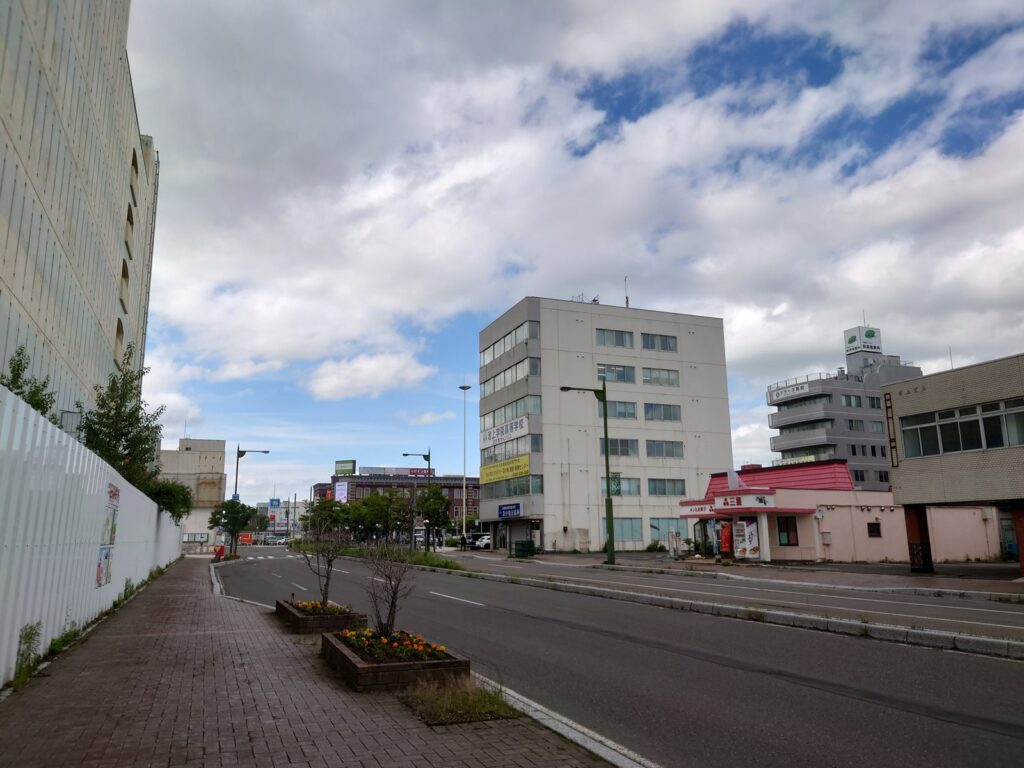
The zoning district decides how large a shop can be
The urban area of Tomakomai is divided into 13 types of zoning district. The zones where a shop can be built are limited by its floor area as follows.
| Floor area of the shop | Zones where it can be built |
|---|---|
| 150 m² or less | Category 1 and 2 mid/high-rise exclusive residential, Category 1 and 2 residential, quasi-residential, neighborhood commercial, commercial, quasi-industrial, industrial (also Category 2 low-rise exclusive residential) |
| Over 150 m² up to 500 m² | Category 1 and 2 mid/high-rise exclusive residential, Category 1 and 2 residential, quasi-residential, neighborhood commercial, commercial, quasi-industrial, industrial |
| Over 500 m² up to 3,000 m² | Category 1 and 2 residential, quasi-residential, neighborhood commercial, commercial, quasi-industrial, industrial |
| Over 3,000 m² up to 10,000 m² | Category 2 residential, quasi-residential, neighborhood commercial, commercial, quasi-industrial, industrial |
| Over 10,000 m² | Neighborhood commercial, commercial, quasi-industrial, industrial |
In Category 1 low-rise exclusive residential zones (such as Uguisu Danchi, Nozomicho and the residential streets of Takuyu), shops generally cannot be built. A “combined-use house”, where part of a home is used as a shop, is possible if the shop part is 50 m² or less and less than half of the building. Shops cannot be built in exclusive industrial zones (the Eastern Industrial Base and the Western Industrial Base).
You can look up the zoning district from an address with the “Tomakomai City Planning Information Service”. However, maps are easy to misread near zone boundaries, so please confirm with us or with the city’s Future Creation Strategy Office (0144-32-6229) before signing a contract.
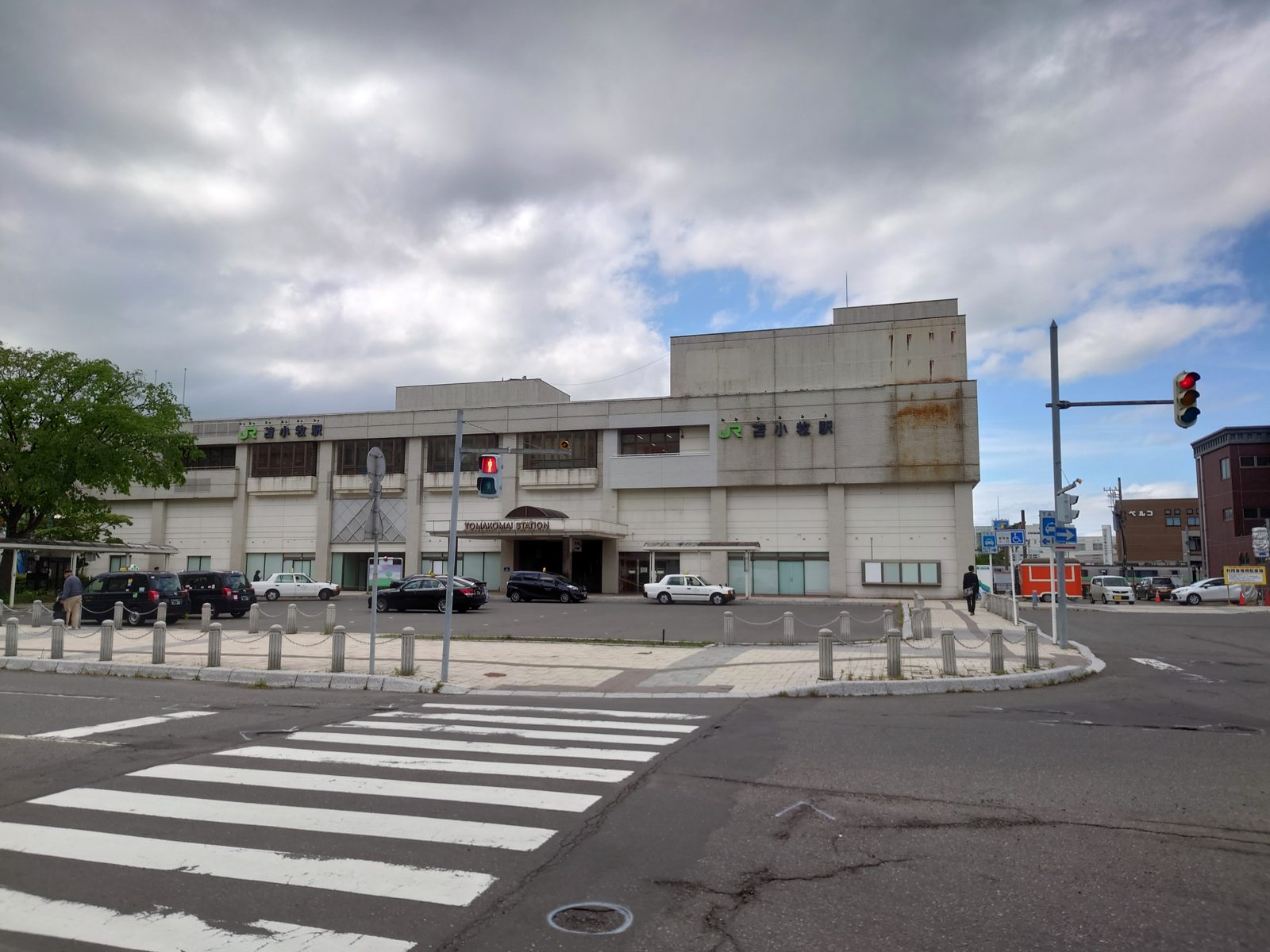
Commercial land prices in Tomakomai: “flat in the center, demand moving to the suburbs”
In the 2026 official land price survey, commercial land in Tomakomai moved as follows.
| Site | Zoning district | 2026 ¥/m² | Change | 2021 ¥/m² |
|---|---|---|---|---|
| Omotemachi 5-chome (in front of the station) | Commercial | 42,600 | −1.8% | 49,500 |
| Omotemachi 1-chome | Commercial | 40,700 | −1.0% | 44,500 |
| Omachi 1-chome | Commercial | 29,300 | 0.0% | 30,000 |
| Nishikimachi 2-chome | Commercial | 28,600 | 0.0% | 29,700 |
| Futabacho 3-chome (along National Route 36) | Commercial | 27,800 | +1.5% | 26,600 |
Source: MLIT official land prices (2026). Omotemachi in front of the station is the most expensive site in the city, but it has fallen 14% in five years. On the other hand, Futabacho along National Route 36 has started to rise. This contrasts with residential land, which rose by an average of +4.15%. The reality in Tomakomai is that shop demand is moving from “street-level shops in front of the station” to “roadside shops with parking”.
This matters both to sellers and to tenants. If you are selling a shop in the center, there is no reason to wait for prices to rise. If you are renting, depending on the type of business, there may be room to negotiate terms in the center.
How to handle shop-houses
In Tomakomai, many shop-houses with a shop on the first floor and a home on the second floor remain in the center and the old town (Omachi, Nishikimachi, Motomachi, Wakakusacho). There are three points when selling or buying one.
- Check the zoning district: Is the size of the shop part within what the zone allows? If not, the next buyer cannot use it as a shop, and it is valued as a house.
- Splitting for tax purposes: The ¥30 million special deduction on sale and the mortgage tax deduction apply only to the residential part. Use the floor plans and the tax assessment details to split the floor area between shop and home.
- Types of buyers: Buyers of shop-houses are either “people who will run their own business” or “people who will live there and use the shop part as storage or an office”. There are many of the latter, so the property has a price even if the shop is not in use.
If you rent it out, the type of contract (business or residential) depends on whether you rent the shop and home parts separately or together. The protection for residential tenants under the Act on Land and Building Leases is different from the terms of business contracts, so you need to sort this out before signing.
What to check when renting a shop
- Zoning district and type of business: Does the property have the equipment needed for your restaurant, retail or service business (ventilation, grease trap, number of parking spaces)?
- Deposit and non-refundable portion: In Tomakomai, contracts commonly have a deposit of 3 to 6 months’ rent, with a non-refundable portion (shokyaku)
- Scope of restoration: Must you return it as a bare shell, or can you return it with fixtures left in place (inuki)?
- Snow: Who pays for clearing snow from the parking lot? Tomakomai gets little snow, but some properties have parking lots that become unusable because of snowdrifts
Steps to sell a shop or business property
- Free valuation (if a tenant is in place, we also value it by an income-based price using the rent)
- Brokerage contract and start of marketing. Buyers of business properties are often investors or companies from outside the city, so we advertise both on the real estate industry network (REINS) and on our own website
- Sales contract and handover. If a tenant is in place, the lease is transferred to the buyer
We also handle business properties such as shops, offices and warehouses from our office in Honkocho, Tomakomai. We welcome early-stage questions such as “Can I open a shop at this address?” or “How much is this shop-house worth?”
This page was machine-translated. The Japanese original prevails.
Frequently asked questions
Can I turn a vacant house in a residential area into a shop?
It depends on the zoning district. In a Category 1 low-rise exclusive residential zone, shops generally cannot be built (with exceptions such as a combined-use house with a shop of 50 m² or less). In a Category 1 residential zone, shops up to 3,000 m² are allowed. If you give us the address, we will check the zoning district.
When I sell a shop-house, can I use the mortgage tax deduction or the ¥30 million deduction?
Yes, for the residential part. The calculation splits the shop and home parts by floor area, so please prepare the floor plans and the property tax assessment details. If the residential part is 90% or more, the whole property may be treated as residential.
What is the typical rent for a commercial tenant?
It varies widely with location, building age and equipment, so we cannot give one figure. However, suburban properties along National Routes 36 and 276 or with parking tend to be let faster than street-level shops in the center. Please contact us about specific properties.
Are there restaurant properties with fixtures left in place (inuki)?
It depends on the timing. With inuki properties, you need to check who owns the equipment (the previous tenant or the landlord) and the terms for transferring the fixtures. If you tell us your type of business, size and budget, we will search, including properties not yet on the market.
Business land, warehouses and shops
We sometimes have information on industrial land and income properties before it is published. Tell us what you are looking for.
Banana House Inc., 1-1-1 Honkocho, Tomakomai. We never use pushy sales. Please write in English or Japanese.
Sources and data
- Data retrieved: 2026-10-05. All prices are official public data and do not include our own estimates.
Yuki Nakazawa (President, Banana House Inc.) reviewed the Japanese original of this article. As a licensed real estate broker, we follow the Japanese rules for real estate advertising.